

How To Paint Over Drywall Repair
1 / 10
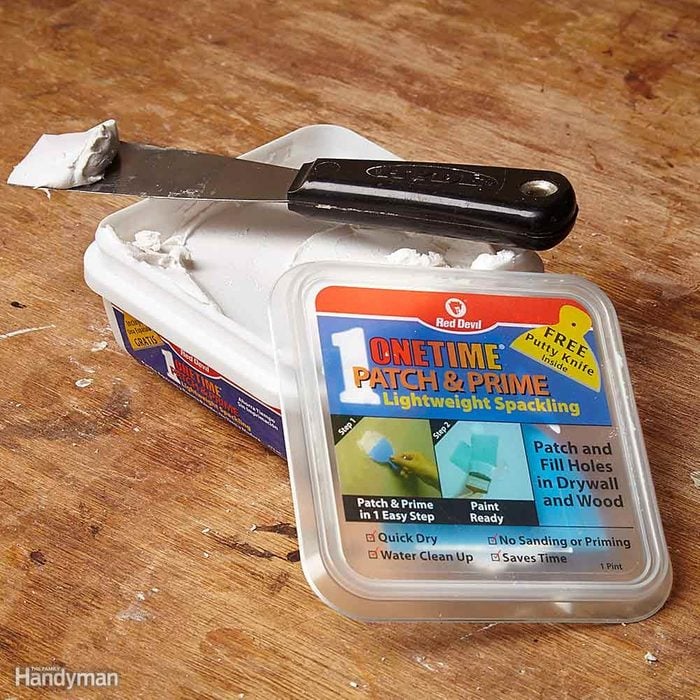
Apply Self-Priming Filler
Patches made with traditional patching materials demand to be primed with a sealing-type primer before painting. Otherwise the patched areas could testify through the finished paint job equally foggy spots. Simply if yous patch with a self-priming patching textile, you can avert this extra step. There are several brands; just expect for the words 'self-priming' or 'with primer' on the container.
2 / x

Employ Setting Compound for Large Holes
Information technology's fine to fill up screw holes and other small wall dings with patching compound, but for dime-size and larger drywall repairs, and for holes that are deep, it's best to utilize a joint compound that sets up by a chemical reaction. These are available in powder form with setting times ranging from five to xc minutes. The reaction starts when you mix in the water, and the chemical compound hardens in the specified time. The five-infinitesimal version is nice considering you can buy the powder in a user-friendly 5-lb. box, and the compound hardens rapidly, so you lot can employ some other glaze right abroad. Remember, setting-type compounds are harder to sand than regular patching materials, so make sure to strike them off flush to the surface when yous fill the hole. You'll find setting-type compounds wherever drywall taping supplies are sold.
3 / 10
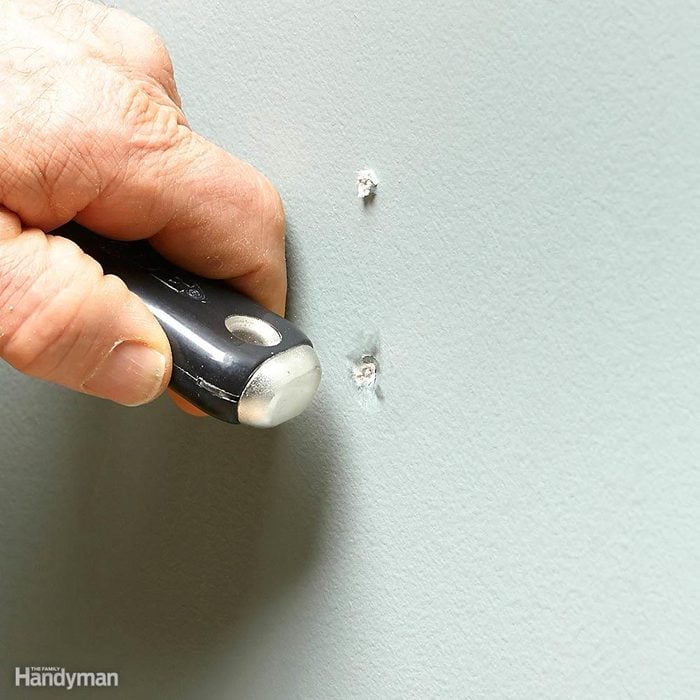
Make a Dent for the Patching Compound
When you remove a smash, drywall anchor or flick hanger, there is usually a little ridge of sometime pigment or drywall sticking out that'southward hard to comprehend with patching material. The solution is to make a dent over the hole, and then fill the dent. Almost good-quality putty knives have a rounded hard plastic or brass cease on the handle that works perfectly for making the paring. The rounded end of a screwdriver handle or the handle of a utility pocketknife will also work. Press the handle against the hole and twist it slightly while applying pressure to dent the surface, or if you have proficient aim, use your denting tool similar a hammer.
four / 10
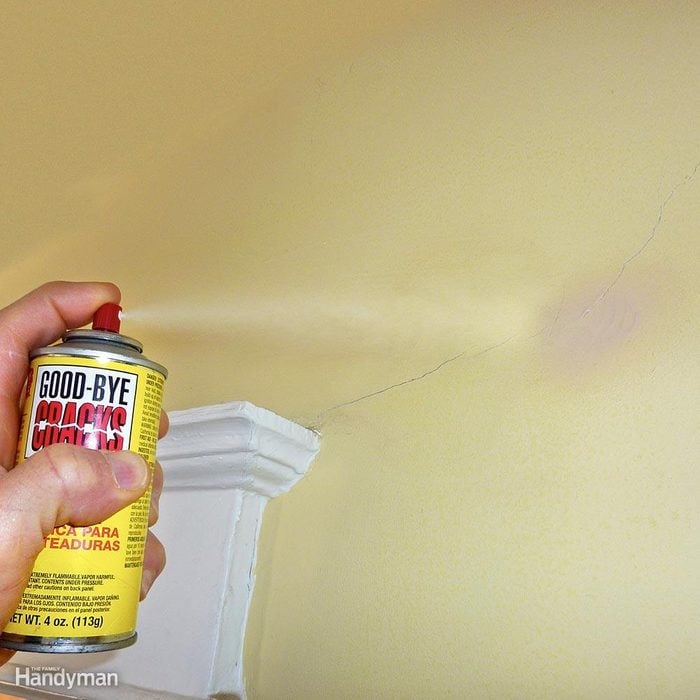
Comprehend Cracks with Repair Spray
Stress cracks usually evidence up around window and door openings. The cracks are the result of framing movement and are hard to prepare permanently. But using spray-on fissure repair is a expert style to at least extend the life of your repair. The spray forms a flexible membrane over the scissure that can stretch and relax as the building moves.
If the crack is open, fill up it first with patching compound. Then follow the instructions on the can to cover the fissure with the crack-repair spray. Let it dry out and embrace it with paint to finish the repair. Yous'll detect cleft-repair spray at hardware stores, paint stores or online.
v / 10
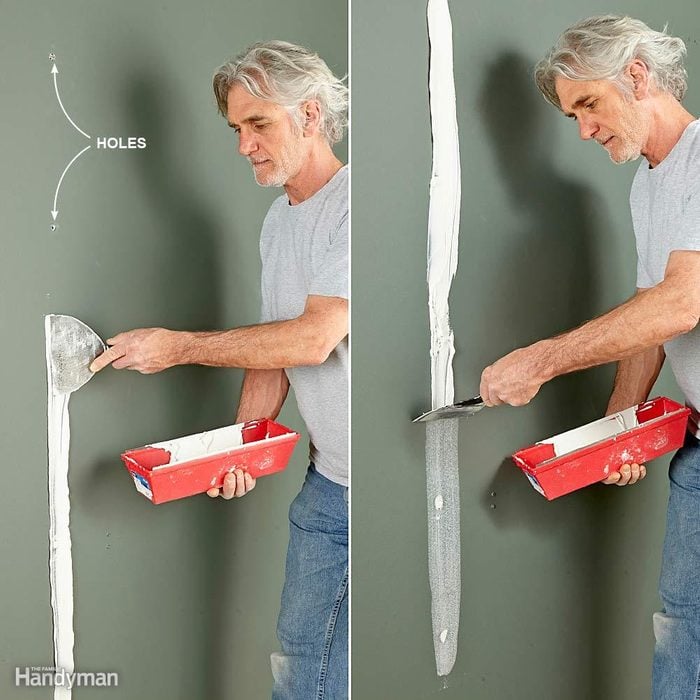
Fill a Row of Holes with One Swipe
Professional drywall tapers always fill a row of screw holes with i long stripe of joint compound, rather than filling every screw hole separately. In add-on to being faster, this method disguises the spiral holes better and makes it easier to sand the patch. Instead of sanding around each hole, you tin merely sand the whole stripe.
You tin can have advantage of this tip whenever you're filling a serial of holes that are lined up and close together, like the holes left from a shelf standard or a row of pictures. Use a half-dozen-in.-wide putty knife and utilize the compound as shown in the ii photos.
vi / 10
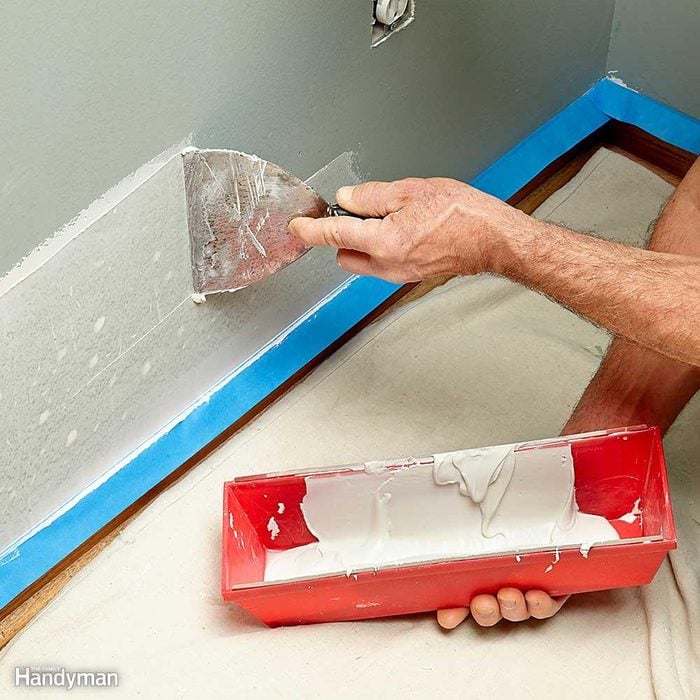
Skim-Coat Areas with Lots of Dings or Holes
In areas with a lot of dents and holes, like in the mudroom where boots, hockey sticks and golf club bags leave their marks, don't try to make full every paring individually. Instead go a wider taping pocketknife—a 6-in.-wide putty pocketknife volition do—and simply skim the entire surface area with joint compound. For the best results, apply 'topping' or 'all-purpose' joint compound.
Mix a tablespoon or ii of water into three or iv cups of the joint compound to go far easier to spread. And so put a few cups into a drywall pan and employ your half-dozen-in. pocketknife to spread information technology. Spread a thin glaze of articulation compound over the expanse. So scrape it off, leaving just plenty to fill the recesses and holes. You may have to apply two or three coats to completely fill up holes, but the thin layers dry quickly and are easy to apply. Sand the wall later on the final coat dries.
7 / x
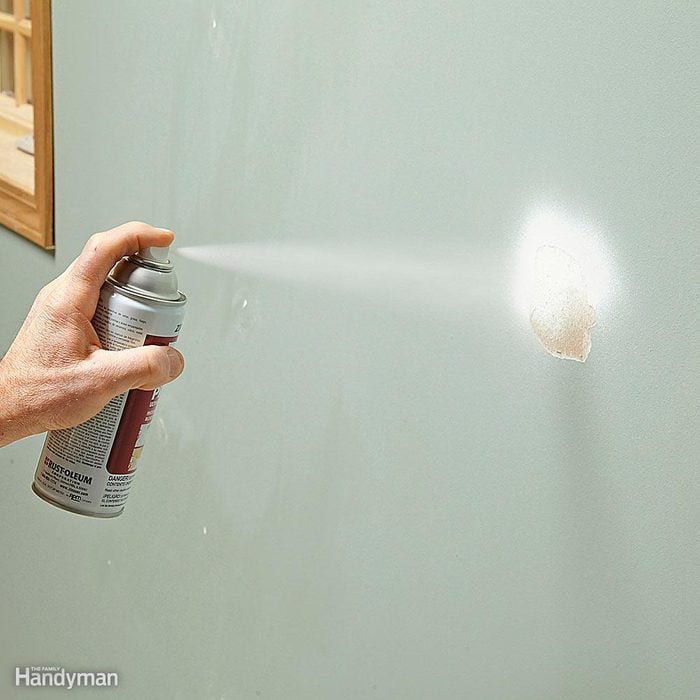
Seal Exposed Drywall Paper Before Patching
When you peel off old adhesive or self-sticking picture hangers, you often tear off the top layer of drywall paper, leaving fuzzy brown newspaper exposed. If y'all try to patch over this without sealing it outset, the water in the patching material will cause the paper to chimera and create an fifty-fifty bigger problem. The key to patching torn drywall newspaper is to seal it first with an oil- or shellac-based sealer (KILZ Original and BIN are two brands). These are available in spray cans or liquid that you can brush on. Don't apply a water-based product or y'all'll likely have the aforementioned bubbling problem. Afterwards the sealer dries, sand the area lightly to remove the hardened paper fuzz. Then cover it with patching compound as you would for any other wall repair.
8 / 10
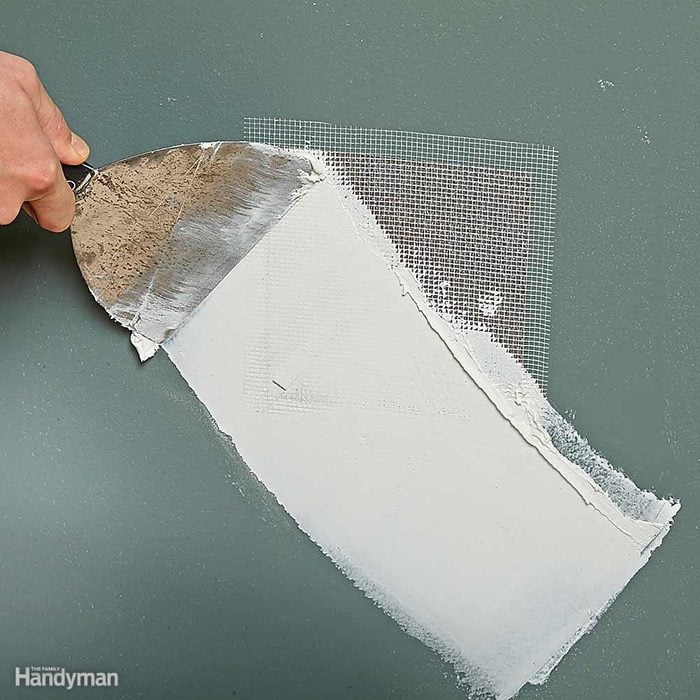
Use Stick-On Patches for Midsize Holes
There are all kinds of means to patch doorknob-size holes. Simply the quickest and easiest is to use i of these stick-on mesh patches. They're available in a few different sizes at paint stores, hardware stores and habitation centers. To use the patch, just clean the wall surface and sand information technology to give the surface a lilliputian 'tooth.' Then stick the patch over the hole and cover it with 2 or three thin layers of joint compound. You can speed up the procedure by using setting-type compound for the start coat.
9 / ten
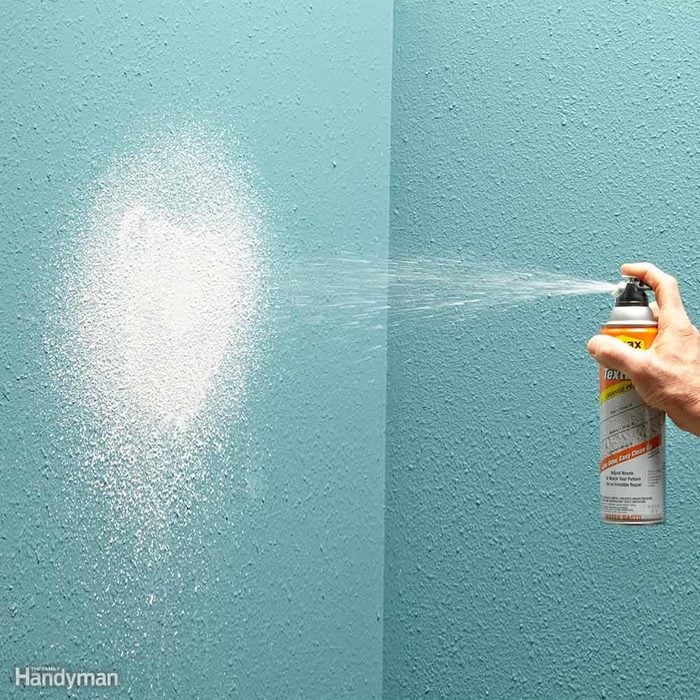
You lot Can Spray on Wall Texture
Orange peel texture on walls or ceilings is nice for hiding defects and calculation interest, just it can be a existent pain if yous accept to make a big patch. Luckily you can buy spray-on orangish peel patch that will allow you to match the texture of the patch without hiring a pro. You lot can buy the patching material in a few dissimilar versions: regular, quick-drying and pro. The pro version gives you the most command over the spray blueprint.
Brand sure to exercise spraying the texture onto a scrap of drywall or cardboard to fine-tune your technique before you spray it on the wall patch. Let the test piece dry before you decide whether y'all need to adjust the nozzle for a coarser or finer texture. Call up, you tin can e'er add another coat if there's not enough texture after the commencement coat dries.
10 / x
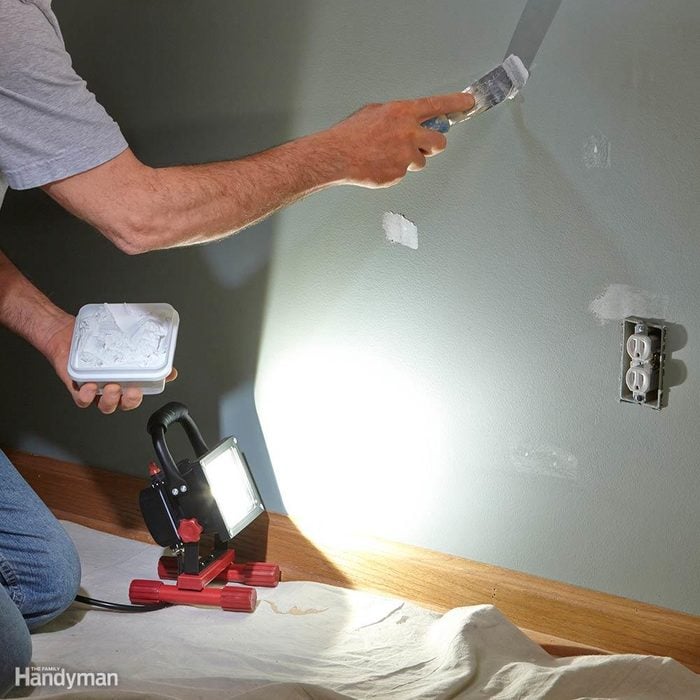
Use a Raking Light When Patching Walls
When you lot're preparing your walls for paint, position a bright low-cal so that the beam rakes across the wall equally shown here. This will accentuate whatever defects, making them easier to see and prepare, and will alert yous to patches that demand more make full or additional sanding. If your walls await polish in raking light, yous tin can be certain they'll look awesome when yous're done painting.
Originally Published: April 17, 2018

Source: https://www.familyhandyman.com/list/tips-for-patching-drywall/
Posted by: dubosethavest79.blogspot.com
0 Response to "How To Paint Over Drywall Repair"
Post a Comment